
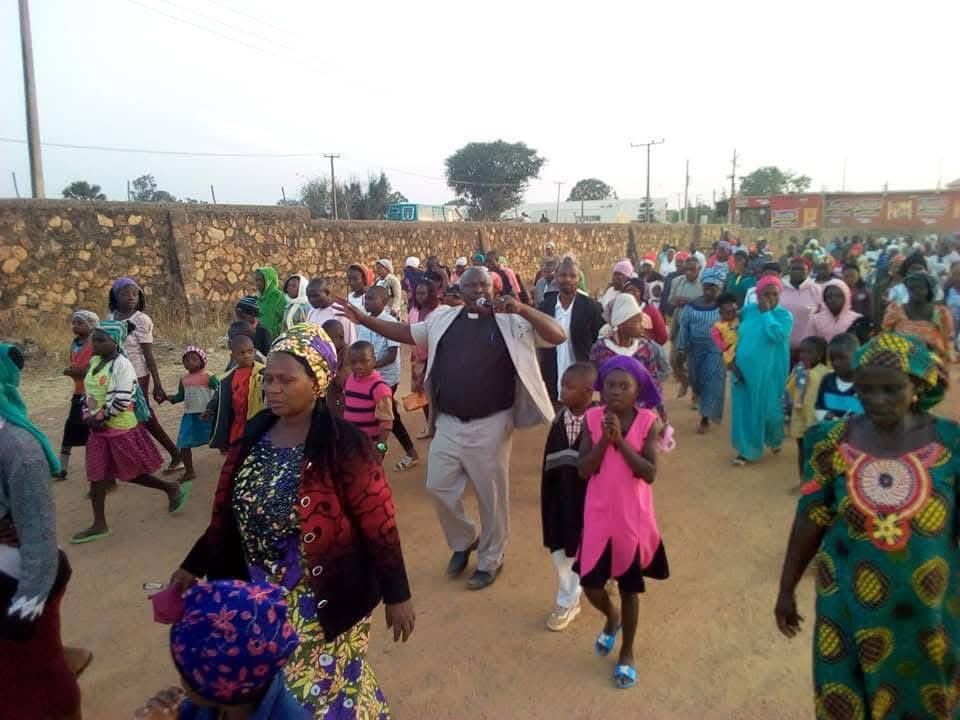
Christian persecution in northern Nigeria is neither a sudden storm nor a lone spark ignited by isolated grievances; it is a decades-long convolution of history, ideology, politics, land, and identity. Rev. Ezekiel Dachomo a respected figure among evangelical and Pentecostal communities in Plateau State and across central and northern Nigeria emerges in this landscape not as a political agitator but as a pastor whose voice attempts to name the pain that thousands of Christian families endure in rural settlements stretching from Southern Kaduna to the fringes of Borno and Yobe. The violence that often surrounds these regions is frequently attributed to a complex mixture of actors: extremist factions such as Boko Haram and the Islamic State West Africa Province (ISWAP), armed bandit groups seeking financial gain and territorial control, and local militia movements shaped by inter-ethnic disputes between farming and herding communities. These dynamics create a vortex where faith becomes entangled with land rights, security failures, and national politics. Rev. Dachomo’s advocacy consistently emphasizes that communities are not merely facing random violence but a coordinated pattern of attacks that target churches, clergy, farmers, and families whose identity is bound to Christianity and whose villages sit on contested lands. His message carries a dual burden: to comfort the grieving and displaced, and to insist that the world acknowledges what is happening as more than local quarrels but as a systematic undermining of Christian existence in many rural areas of northern Nigeria.
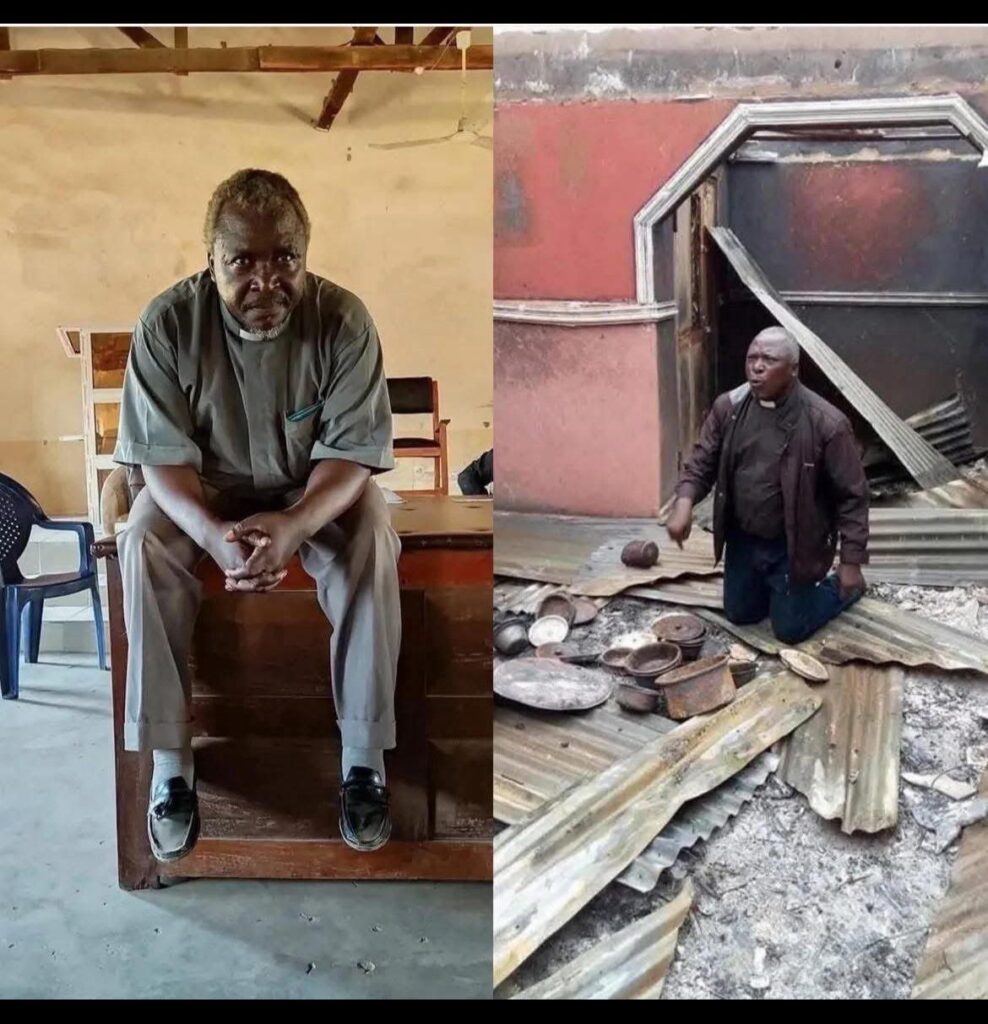
The testimonies that surround Rev. Dachomo’s ministry give human shape to a crisis often described in abstract statistics villages razed by night, farmlands seized after attacks, and churches shuttered for fear of retaliation. Many Christian farmers in states such as Benue, Plateau, and Kaduna recount how militants or armed herders enter communities with sophisticated weapons, enforcing displacement that is rarely reversed because returning home becomes impossible under ongoing threats. For these families, persecution is not a theoretical category but a lived experience of funerals, ruins, and abandoned farmland. Rev. Dachomo frequently speaks about widows who now lead households amid trauma, orphans who must navigate the remains of burned towns, and pastors who attempt to rebuild congregations without resources or security protection. The Nigerian state, despite various military operations, has often been unable to prevent attacks or secure vulnerable border and forest regions. This vacuum, in Rev. Dachomo’s framing, nurtures a climate where Christian communities feel unseen left to endure cycles of attacks that rarely result in arrests or prosecutions. His sermons and public remarks dwell on the spiritual strength of communities who continue worship even when their churches are targeted, underscoring a faith that adapts to displacement and finds sanctuary in makeshift camps, open fields, or temporary shelters erected after new waves of violence. Yet he also stresses that faith cannot be isolated from justice, and that long-term resurrection of these communities requires structural action rather than mere resilience.
Within broader Nigerian discourse, Rev. Dachomo’s advocacy sparks debate because persecution intersects with politically sensitive fault lines—ethnic identity, historical grievances between farmers and pastoralists, the legacy of British colonial boundaries, and the contemporary rise of violent non-state actors. Some analysts caution against simplifying the crisis as purely religious, arguing that land degradation, climate migration, and competition over grazing routes have escalated tensions between Fulani herders and farming communities across the Sahel. Others counter that the pattern of attacks, particularly those targeting Christian-majority villages, churches, and clergy, reveals clear ideological motives. Rev. Dachomo acknowledges these layers, but he insists that religion cannot be dismissed as incidental when attackers explicitly identify victims through markers of Christian identity. The challenge, then, is not to flatten the crisis into a single narrative but to understand how faith, land, ethnicity, and governance become intertwined in a region where security has eroded and where government responses often lag behind the speed of extremist mobilization. His speeches frequently emphasize the psychological warfare embedded in persecution: the fear that keeps farmers from tending their fields, the silence that follows after communities lose confidence in authorities, and the slow erosion of cultural and spiritual heritage when displaced families settle far from ancestral homelands. He appeals not only to national stakeholders but to international Christian organizations, human rights groups, and global observers, urging them to see northern Nigeria not merely as a troubled frontier but as a region where Christian populations are fighting for survival and recognition.
The story of Rev. Ezekiel Dachomo ultimately invites reflection on what it means for a religious leader to stand in the middle of a conflict shaped by forces larger than any church or denomination. His voice becomes emblematic of a wider Christian cry for safety, justice, and the right to live without fear. Yet the significance of his advocacy extends beyond the immediate conflict. It points toward the future tension between Nigeria’s demographic transformation, its constitutional commitment to religious freedom, and the fragile social fabric that holds its diverse populations together. The question facing northern Nigeria is not only whether Christian communities can endure present dangers but also whether peace, coexistence, and lawful governance can be rebuilt in places where violence has become normalized. Rev. Dachomo’s narrative encourages a reimagining of the region one where the government strengthens security institutions, where inter-communal reconciliation is pursued with sincerity, and where religious diversity is protected rather than weaponized. His work illustrates that persecution cannot silence faith, but it can reshape nations if left unchecked. The resilience of those he speaks for, living between memory and hope, becomes a quiet testament to survival. Their endurance challenges Nigeria, and the international community, to confront uncomfortable truths and to begin the long process of rebuilding trust, land, and life in a region scarred by conflict. Even amid uncertainty, their continued worship and communal solidarity suggest that the story is not only one of suffering but also of an unextinguished light that insists on its place in the northern Nigerian landscape.
Leave a Reply